
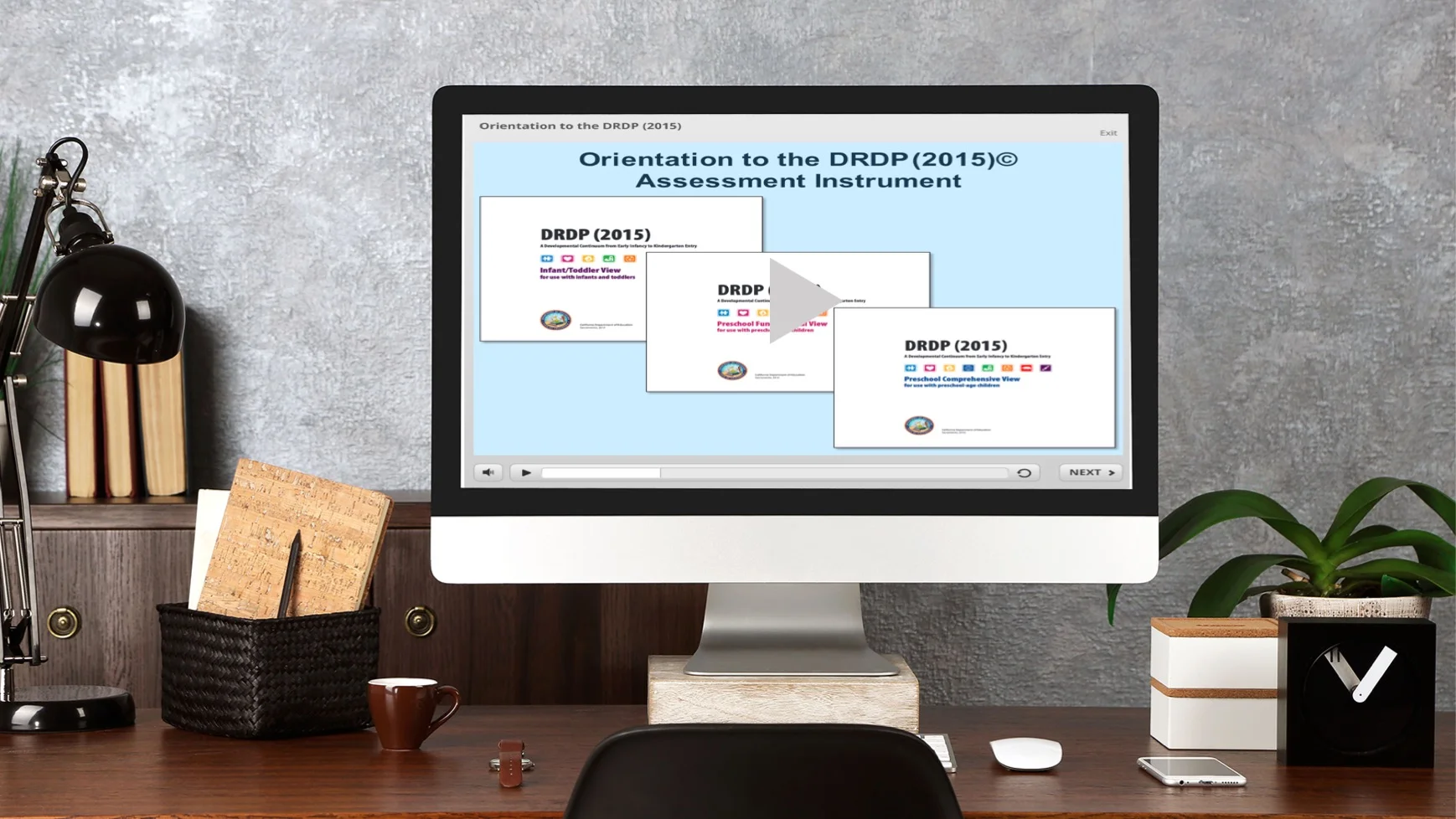
The Desired Results Developmental Profile (2015), also known as the DRDP is a Developmental Continuum from Early Infancy to Kindergarten Entry. The DRDP is a formative assessment instrument for young children & their families used to inform instruction & program development.
Regulations & Policy
Title 5: 17700 (v-x) 17702, 17703, 17709, 17731, 18270.5, 18272, 18273, 18276, 18279–18281
Head Start Performance Standard: 1302.33(b)
The program uses DRDP information to plan & conduct age & developmentally appropriate activities.
A program must conduct standardized & structured assessments, which may be observation-based or direct, for each child that provide ongoing information to evaluate the child’s developmental level & progress.
A program must regularly use information to determine a child’s strengths & needs, inform & adjust strategies to better support individualized learning& improve teaching practices.

Introduction
The DRDP is a formative assessment instrument for young children & their families used to inform instruction & program development. The DRDP is made up of eight domains. The focus of each domain is on the acquisition of knowledge, skills, or behaviors that reflect each domain’s developmental constructs.
Timelines
Complete age-appropriate DRDP for each child enrolled in the program for at least 10 hours per week
Center Based: Complete for each child within 60 calendar days of the child's enrollment in the program
Home Based: Complete for each child within 90 calendar days of the child's enrollment in the program
Completed at least once every 6 months thereafter
For Head Start programs, a mid-point is completed. The midpoint collection is a check-in on individual child areas of growth in addition to areas of strength, as it relates to the Grantee's school readiness goals within the 5 essential domains.
Tools:
Excel Version with drop down year (Calendar Days/Operating Days)

Preparation
Before collecting assessment evidence, read through the entire DRDP assessment tool to know what behaviors and skills to consider. Pay special attention to the 4 D's of the assessment (Domain/Definitions/Developmental Levels/Descriptors)
DRDP (2025)—children with no IFSP/IEP
Preschool – Transitional Kindergarten – Kindergarten (PTK) View
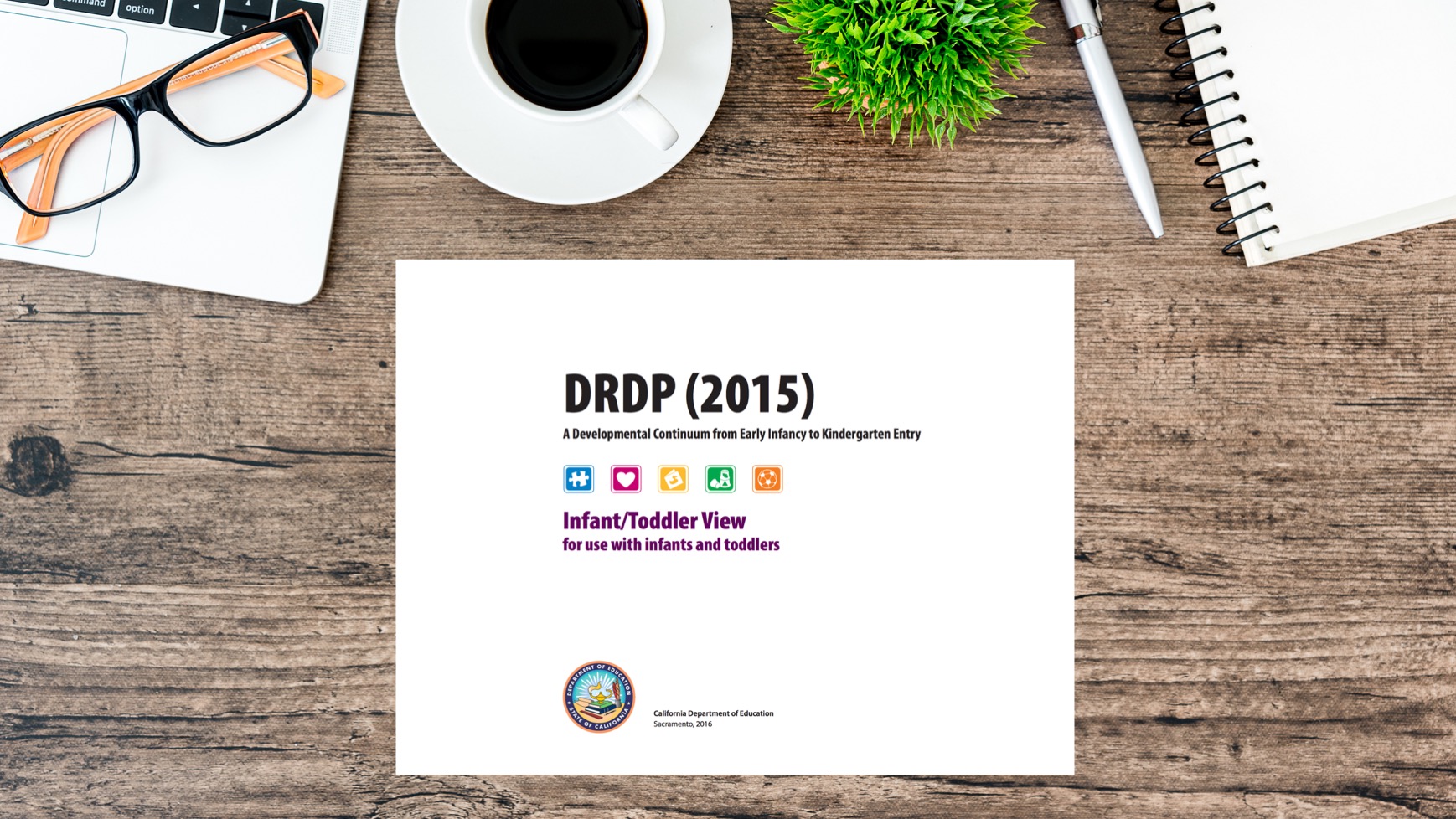
Infant/Toddler (IT) View
DRDP (2015) —children with IFSP/IEP
Preschool Fundamental View
DRDP Preschool© Fundamental View for use with preschool-age children PDF
Fundamental View Measures at-a-Glance PS PDF Spanish translation PDF
Fundamental View Rating Record PS PDF Spanish translation PDF
Infant Toddler Comprehensive View
DRDP Infant/Toddler© Comprehensive View for use with Infants and Toddlers PDF
Comprehensive View Rating Record I/T PDF;68KB
Comprehensive View Infant/Toddler Domains and Measures At-a-Glance PDF
Step 1: Observe & Document
Since DRDP focuses on child's behavior, knowledge & skills; the first step is to capture a child's behavior through incorporating observation in natural settings. Observations are completed & maintained in an electronic child portfolio called Learning Genie.
Note: Parent observations may be incorporated into observations. In addition, ASQ3/ASQ SE may be used as supplemental observations.
DRDP 2025 Sample Strategies
Measure Tracking Sheet
DRDP 2025 (Infant/Toddler) (Preschool)
DRDP 2015 (Infant/Toddler) (Preschool)
Learning Genie
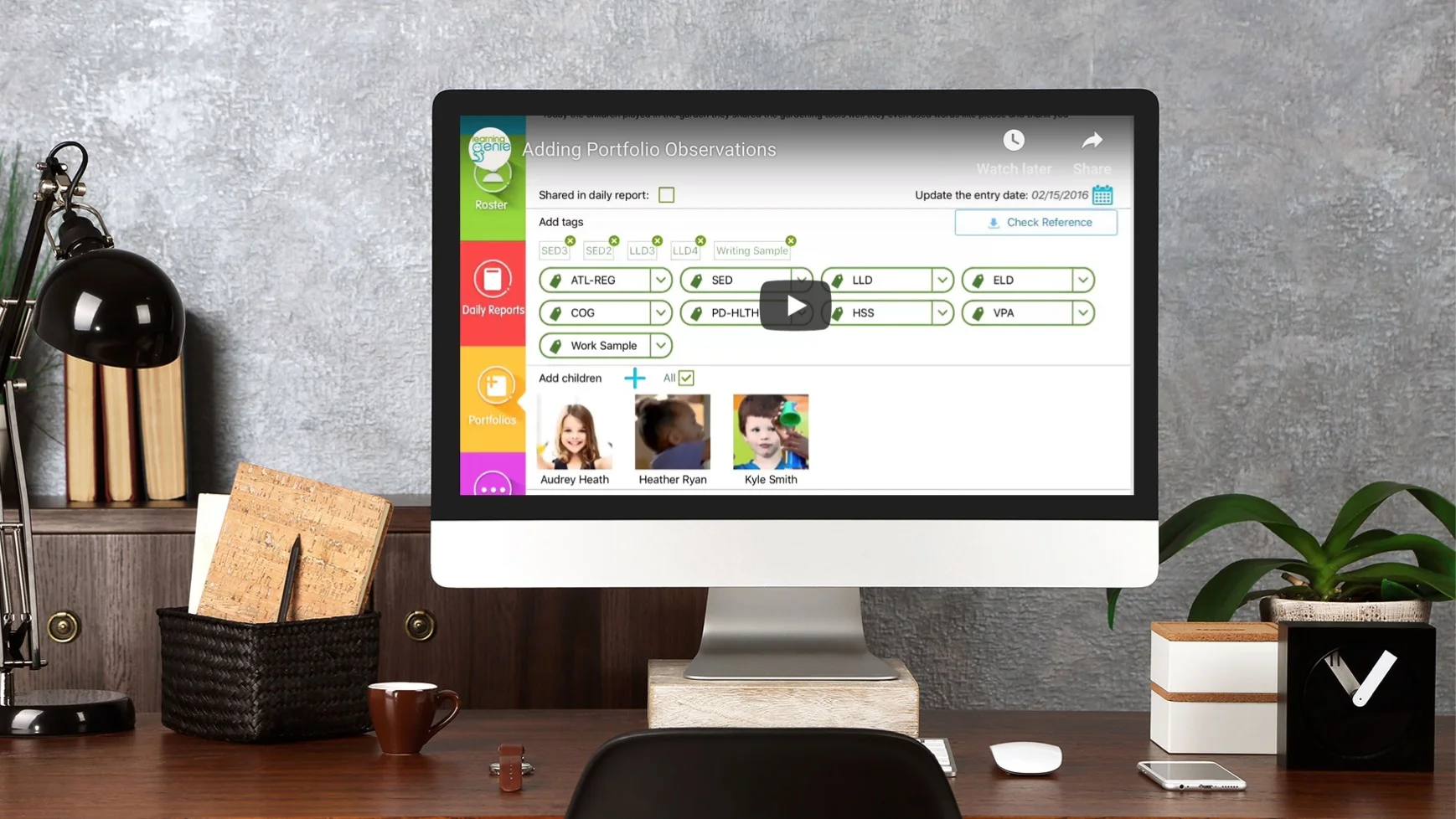
Learning Genie: Adding Portfolio Observations (English)
Step 2: Rate the Measures
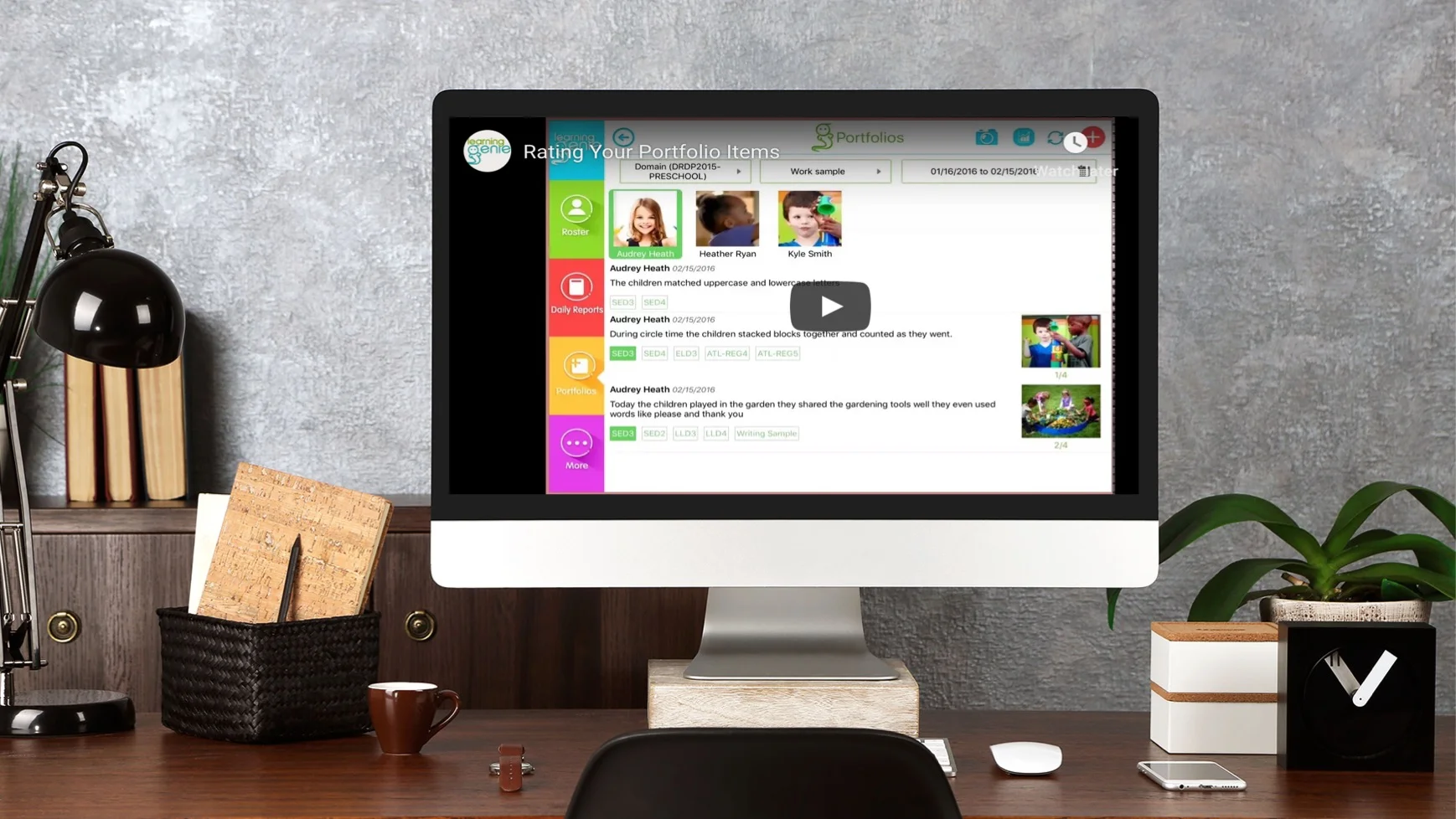
For each measure, based on the supporting observation records, the teacher or provider will determine the latest developmental level the child has mastered & mark it appropriately. Measures are rated & maintained in an electronic child portfolio called Learning Genie.
Step 3: Analyze & Use Assessment Data
Reports are pulled from Learning Genie Dashboard for data analysis. Based on results, DRDP outcomes are linked to ongoing planning.
Tools:
School Readiness Process

Individual Child
In collaboration with the child's parent at a home visit parent/teacher conference, individual goals will be developed & documented on the School Readiness Planning Form. In addition, child strengths will be shared & documented on the Parent Contact Record.
Forms:
Classroom
On the Class School Readiness plan teachers will document the analysis, summary , reflection & follow up based on the DRDP data compiled at the classroom level. One School Readiness Goal will be selected to focus on from the SCOE School Readiness Goals for planning.
Forms:
Knowledge Check
Are you ready to check for understanding? No worries, if you do not do well the first time, you can take the Knowledge Check a second time.
Good luck my friend!