

Regulations & Policy
Head Start Performance Standard 1304.16
Administration for Children & Families (ACF) will conduct observations of multiple classes operated by the grantee based on a random sample of all classes & rate the conduct of the classes observed using the CLASS: Pre-K instrument.
After the observations are completed, ACF will report to the grantee the scores of the classes observed during the CLASS: Pre-K observations in each of the domains covered by the CLASS: Pre-K instrument.
ACF will average CLASS: Pre-K instrument scores in each domain for the classes operated by the agency that ACF observed to determine the agency's score in each domain.
Tools:
Manual & Guide (See Master Teacher)

What is CLASS
Classroom Assessment Scoring System (CLASS) is an observational instrument that assesses classroom quality in preschool through third grade classrooms. The CLASS assesses three domains of classroom experience:
Emotional Support
Classroom Organization
Instructional Support
Learn how Teachstone helps educators at the local, state, and national levels learn about, measure, and improve interactions.
Emotional Support
Measures children’s social & emotional functioning in the classroom & includes four dimensions:
Positive Climate addresses the emotional connection, respect & enjoyment demonstrated between teachers & children & among children.
Negative Climate addresses the level of expressed negativity such as anger, hostility, or aggression exhibited by teachers and/or children in the classroom.
Teacher Sensitivity addresses teachers’ awareness of & responsivity to children’s academic & emotional concerns.
Regard for Student Perspectives addresses the degree to which teachers’ interactions with children & classroom activities place an emphasis on children’s interests, motivations & points of view.
Classroom Organization
Measures a broad array of classroom processes related to the organization & management of children’s behavior, time & attention in the classroom. It includes three dimensions:
Behavior Management addresses how effectively teachers monitor, prevent & redirect behavior.
Productivity addresses how well the classroom runs with respect to routines & the degree to which teachers organize activities & directions so that maximum time can be spent on learning activities.
Instructional Learning Formats addresses how teachers facilitate activities & provide interesting materials so that children are engaged & learning opportunities are maximized.
Recorded Webinar: A Closer Look at Classroom Organization Domain
Instructional Support
Measures the ways in which teachers implement curriculum to effectively support cognitive & language development. It includes three dimensions:
Concept Development addresses how teachers use instructional discussions & activities to promote children’s higher order thinking skills in contrast to a focus on rote instruction.
Quality of Feedback addresses how teachers extend children’s learning through their responses to children’s ideas, comments & work.
Language Modeling addresses the extent to which teachers facilitate and encourage children’s language.
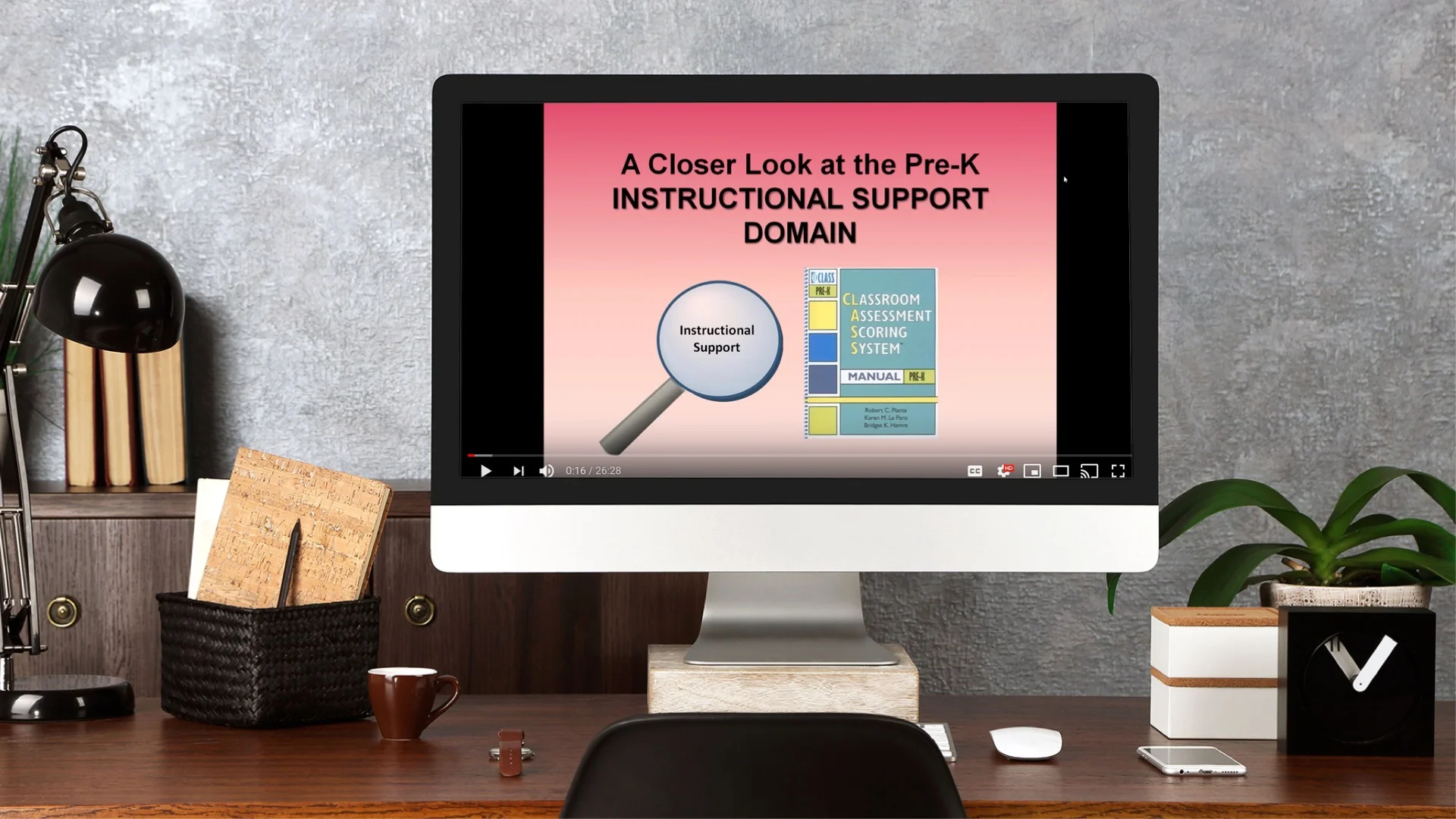
Recorded Webinar: A Closer Look at Instructional Support Domain
Observation
During a CLASS observation, an observer will move around the room to watch & take notes on the interactions among teachers & children for periods of 15-20 minutes. Then, they will stop to assign scores. They repeat this for 2-6 cycles.
We know classroom observations can be intimidating. It’s natural to be nervous, but try to conduct yourself as usual during the observation. Here are a few tips to help you prepare:
Let children know that there will be a visitor in the classroom
Take a deep breathe
“Trust Yourself”
Go about your day as normal. Don’t try to switch things up
Interact & enjoy your children
Uploaded by Teachstone on 2017-08-10.