Our nutrition component ensures that children have nutritious meals & snacks during the time in which they are in the program.
Regulations & Policy
HS Performance Standards 1302.32(e)(2) & Title 5 Sections 17708, 18111 & 18278
Meals & snacks must be culturally & developmentally appropriate for the children being served.
Must meet the nutritional requirements specified by the Child & Adult Food Program (CACFP)/National School Lunch Program (NSLP).
Must implement snack & meal times in ways that support development & learning.
Must provide sufficient time for children to eat, not use food as reward or punishment & not force children to finish their food.
Tools:
Video Description: This Video Talks about Nutritional Needs For Ages 1 through 12
Food Service Requirements for Child Care Centers
Serving safe & nutritious foods to children in care is one of your most important responsibilities. During a facility inspection, Community Care Licensing will review your posted menu:
1) Food safety
Hand-washing
Clean refrigerator
Clean food storage space. All edible items must be stored separately from cleaning materials & poisons
Food & infant milk brought from home must be labeled with child’s name, contents & date provided
2) Types & amounts of foods on hand
Adequate amount of food to serve children at anytime
All snack, meal & beverage items meet the food program standards
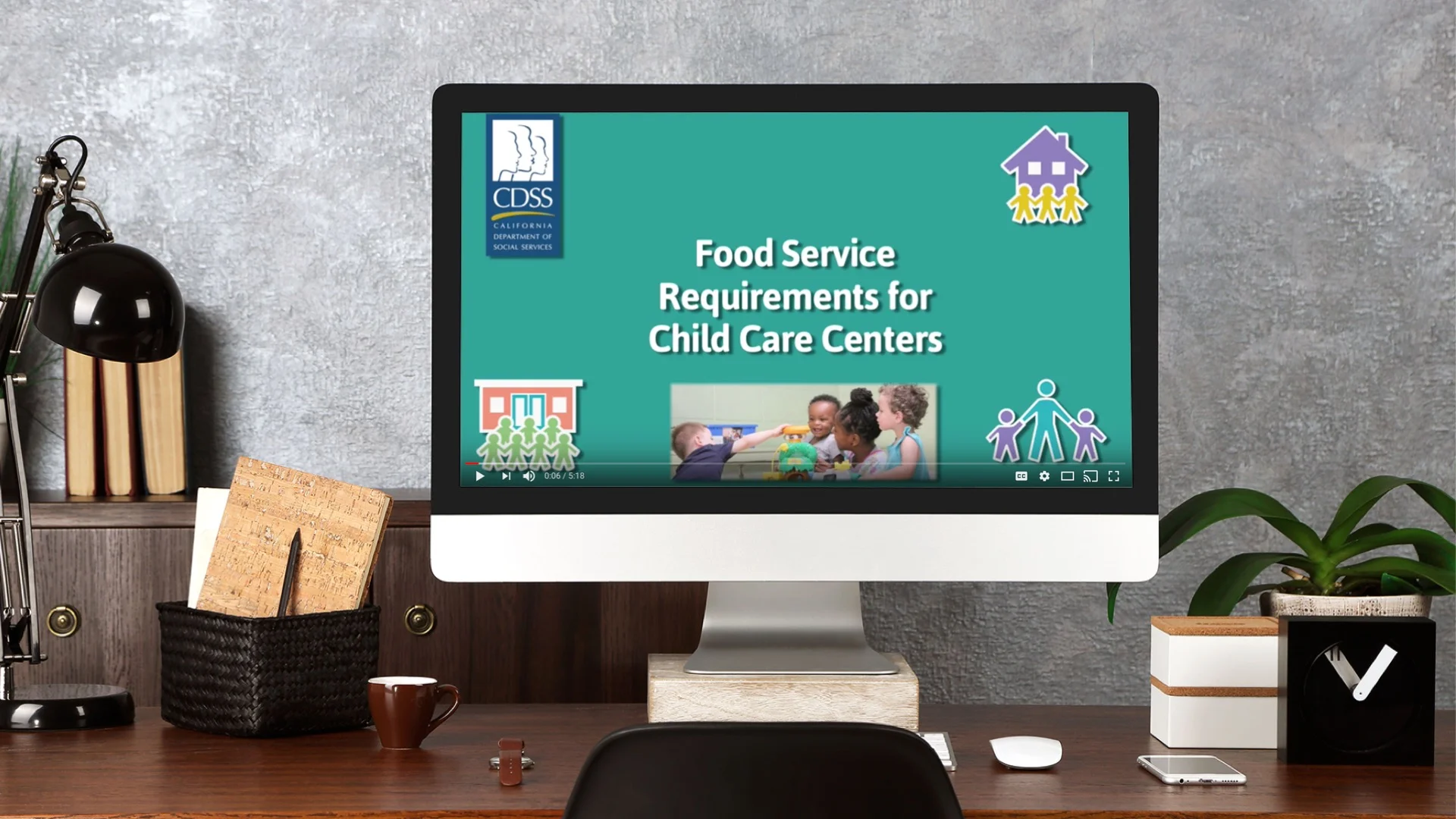
Uploaded by CDSS CCLD Childcare Videos on 2016-06-22.

Learning Experience
Meal & snack times provide great opportunities for teachable moments such as learning about nutrition, trying something new, table manners & sharing. They are also a perfect time to develop & practice conversation skills.
Teachers may use the Meal Talk handout as a tool to spur & support conversation between children during mealtimes.
Infant Meal Patterns
Infant meal patterns apply to babies from birth to 1 year of age.
Infant meal patterns support breastfeeding, developmentally appropriate & nutritious meals.
Bottle-fed infants must be held during feeding to support socialization.
Tools:
Video Description: A Video on Nutritional Needs for Infants
Child Meal Patterns
Child meal patterns apply to children 1 year of age & older.
Child meal patterns ensure children have access to healthy, balanced meals throughout the day with the focus on providing a greater variety of vegetables & fruit, whole grains & less added sugar & saturated fat.
Snack & meal times must be structured & used as learning opportunities that support teaching staff-child interactions & foster communication & conversations that contribute to a child’s learning, development & socialization. Family style meals are served when developmentally appropriate.
Ensure sufficient time is given for children to eat, never use food as reward or punishment & do not force children to finish their food.
Tools:
Medical Accommodations/Food Allergies
There must be a confidential alert system in place to ensure anyone serving food is aware of any child that may have a food allergy.
Any meal accommodations must be reviewed with the nurse. If a child needs to eat something different due to a food allergy or religious reason, give parent the applicable form & follow-up with health staff
Food Preference Request form is used for non-medical requests & the Medical Statement to Request Special Meals for medical reasons, such as food allergies.
Tools:
Harvest of the Month
Healthy Children Make Better Learners!
Through our Harvest of the Month program, each month your site will receive a produce delivery with a packet containing the following items:
Educator newsletter for the teacher/staff
Family newsletter to go home with each student
Stickers for taste testers
Activity Tracking Form to be completed after the tasting activity
Tools:
Activity Tracking Form
Crop Calendar
Harvest of the Month Overview (PowerPoint)
Record Keeping
Records are maintained in the GO-Attendance: Sign In and Out Sheets Google Drive
Center Supervisor uploads
Weekly: Sign In/Out Sheets, Ratio Sheets & COPA 236-Child Absentee & Follow Up Report
Center-Based: Monthly COPA reports 201, 208 & 210 used to analyze food program data (Print by 5th of month)
CenterTrack Class Roster Report (Reconcile HS & State Classroom assignment & Program model)
Tools:
Knowledge Check
Are you ready to check for understanding? No worries, if you do not do well the first time, you can take the Knowledge Check a second time.
Good luck my friend!