
Tooth decay is the most common childhood disease, but it's preventable. Children with dental pain can have trouble speaking clearly, eating & learning.
Regulations & Policy
HS Performance Standard 1302.43
A program must facilitate & monitor necessary oral health preventive care, treatment & follow-up, including topical fluoride treatments.
A program must promote effective oral health hygiene by ensuring all children with teeth are assisted by appropriate staff, or volunteers, if available, in brushing their teeth with toothpaste containing fluoride.

Engaging Parents in Their Child’s Oral Health
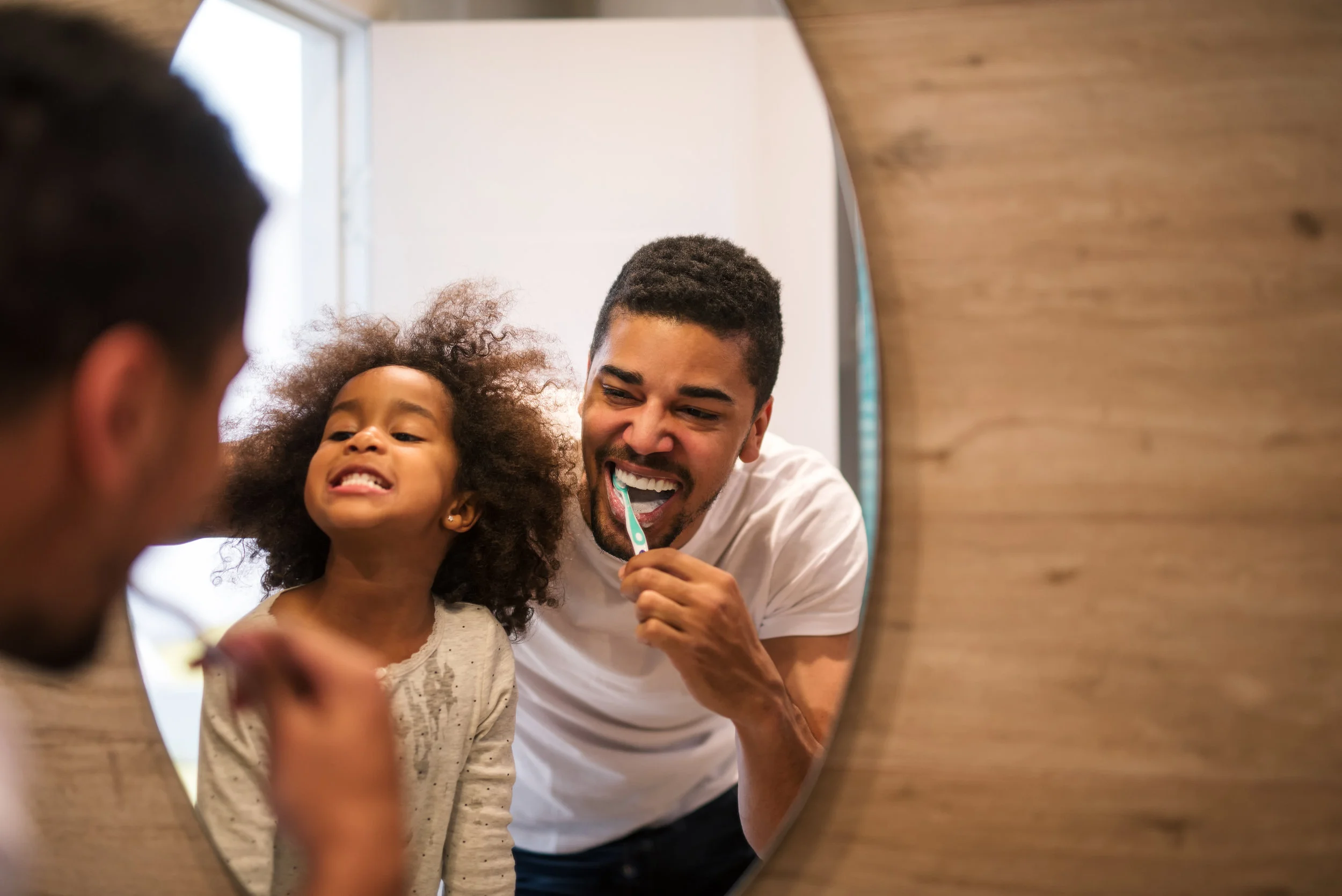
Head Start health services are based on the premise that a child must be healthy to be ready to learn. Parents’ involvement in their child’s oral health is key to the child’s overall health & well-being. Parents who introduce, reinforce & model good oral health behaviors & attitudes pass them on to their children.
Head Start has a series of handouts that provide tips on specific oral health issues. Staff are encouraged to access the handouts to share with families as needed to promote good oral health.
Tools:
Infants who do not have teeth
At least once during the program day for half-day programs & twice daily for full-day programs.
Staff shall wash hands.
Staff shall wear non-latex gloves
Cover finger with gauze pad
Moisten with water a sterile gauze pad
Gently wipe teeth & gums after each feeding
Staff will wash hands after tooth brushing

Upon eruption of first tooth

To promote good oral hygiene habits fluoride toothpaste must be introduced in conjunction with tooth brushing under adult supervision for children at centers/FCCH. Parents must give consent for fluoride as per consent form. If a parent does not consent for the use of fluoride toothpaste, child shall be offered a small smear of non-fluoridated toothpaste.
Upon the eruption of the first tooth, fluoride toothpaste is to be used on the tooth with the gums wiped clean & begin seeing a dentist at the site of the first tooth & every 6 months thereafter.
Under the supervision of center/FCCH staff or trained parent volunteer wearing non-latex gloves will assist toddlers with tooth brushing by modeling & supervising.
At least once during the program
1 child at a time at the sink
Adults must wash their hands & wear non-latex gloves
Adult must apply fluoride toothpaste from individual smear item (i.e., paper towel, cup, plate), then place on toothbrush (to eliminate cross contamination) & supervise each child as they brush
Child must be taught how to spit out excess toothpaste in a sanitary manner
Child will wash hands, with assistance as needed
Adult must rinse out toothbrush with water & return it to holder to air dry, with approved rack covering
Adult will wash hands after tooth brushing
Preschool 3 years of Age & Older
To promote good oral hygiene habits fluoride toothpaste must be introduced in conjunction with tooth brushing under adult supervision for children at centers/FCCH. Parents must give consent for fluoride as per consent form. If a parent does not consent for the use of fluoride toothpaste, child shall be offered a small smear of non-fluoridated toothpaste.
Child must brush their teeth once daily
One child at a time at the sink
Adult must wash their hands & wear non-latex gloves
Adult must hand the child his/her pre-pasted toothbrush at the sink (individual smears to avoid cross contamination)
Children are to brush teeth with fluoride toothpaste & spit residual toothpaste in the sink
Child must rinse toothbrush & return to adult to place in holder (Adult will assist with rinsing as needed)
Child must wash hands after tooth brushing as needed
Adult must wash their hands after tooth brushing
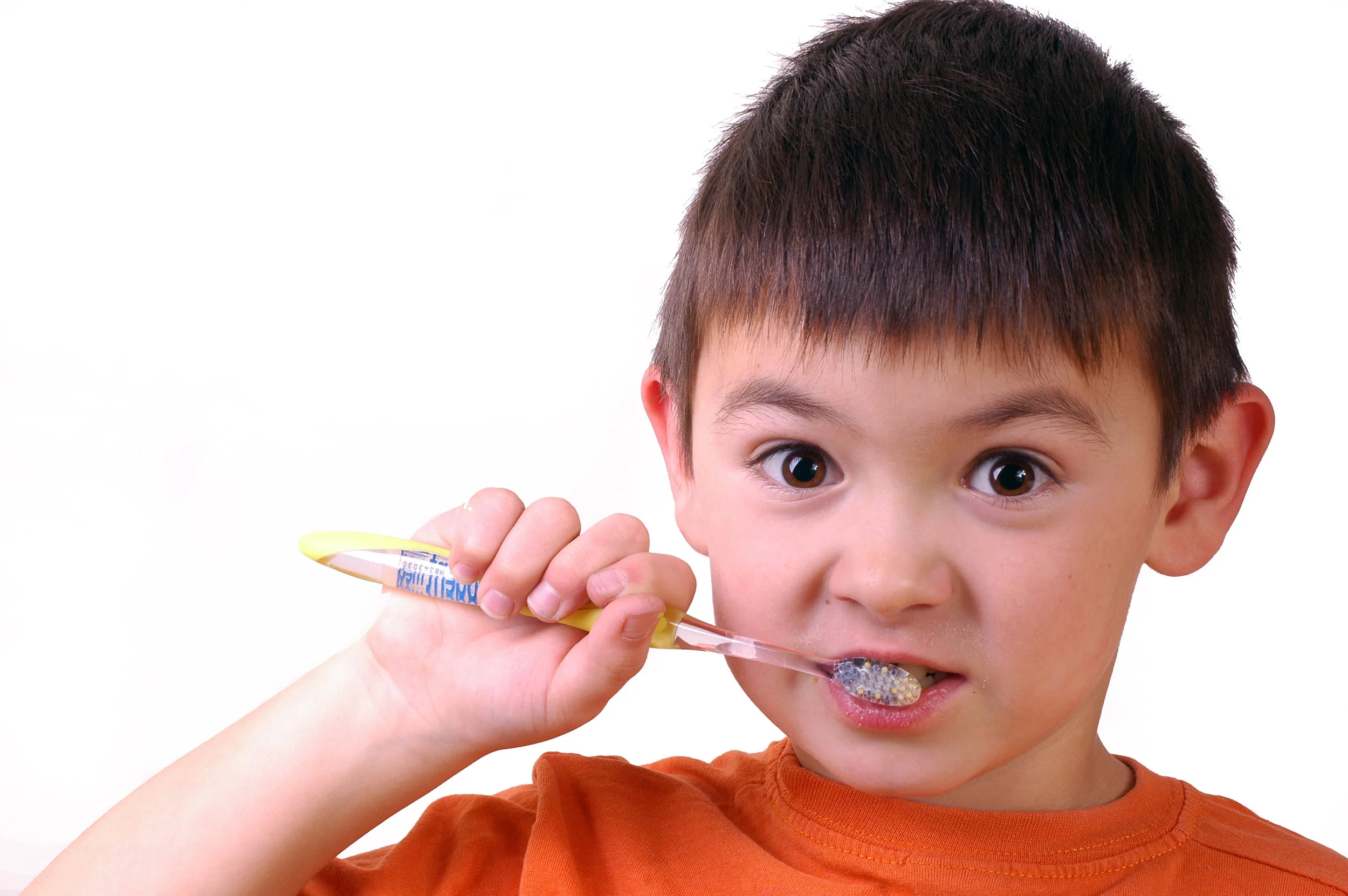
Cleaning/Storing/Replacing Toothbrushes
All children’s toothbrushes are to be replaced at least 3 times through-out program year (every 3 months). Additionally, replace toothbrushes when they have been contaminated by child illness (strep), fallen on floor or other contaminated surface.
Each child must have his or her own toothbrush with a name label.
Toothbrushes must be handled carefully to avoid spreading bacteria. They must be rinsed with water to clean off anything left on the bristles after brushing.
Toothbrushes must be stored in an upright position to air dry. If several toothbrushes are stored in the same holder, make sure there is enough space between the toothbrushes so that they do not touch each other.
Toothbrushes may never be soaked in bleach water or other disinfecting solutions. There is no need to try to disinfect toothbrushes in dishwashers or microwaves or by using ultraviolet devices. Doing these things may damage toothbrushes.
Document
A check mark is placed in the designated box on the sign-in/out sheet to document each brushing.
In addition, it is entered into COPA when attendance is entered.

Knowledge Check
Are you ready to check for understanding? No worries, if you do not do well the first time, you can take the Knowledge Check a second time.
Good luck my friend!